Task force recommendations outline multi-year vision for Mikkelsen Library
The Mikkelsen Library Task Force presented its final recommendations and proposed timeline to the President’s Council on April 14, outlining a multi‑year plan to add tech‑focused collaborative spaces.
The presentation concludes a process that began in November with widespread campus outrage over rumors of drastic space reductions and office relocations.
Rather than overhauling the building to permanently house outside university offices, the group proposed a model that uses temporary pop-up services, three distinct study zones and a gradual reduction of physical materials to create new workspaces.
The framework advises against moving departments like the Student Success Center or the Registrar into the library permanently, citing a need for privacy. Instead, the library will act as a “networked hub” where those departments host workshops or kiosks. The Registrar’s Office has already put this model into action by hosting a pop-up table in the library during registration this year.
To organize the building, the proposals divide the library into three specific zones: collaborative areas for group work, mixed‑use spaces for research support and focused areas for quiet, individual study.
To evaluate potential changes to the library, the task force scored 16 concepts on a weighted rubric in which 50% of a given concept’s score reflected its impact on student success, while the remaining 50% was divided among service integration (20%), operational feasibility (15%), and flexibility/adaptability (15%).
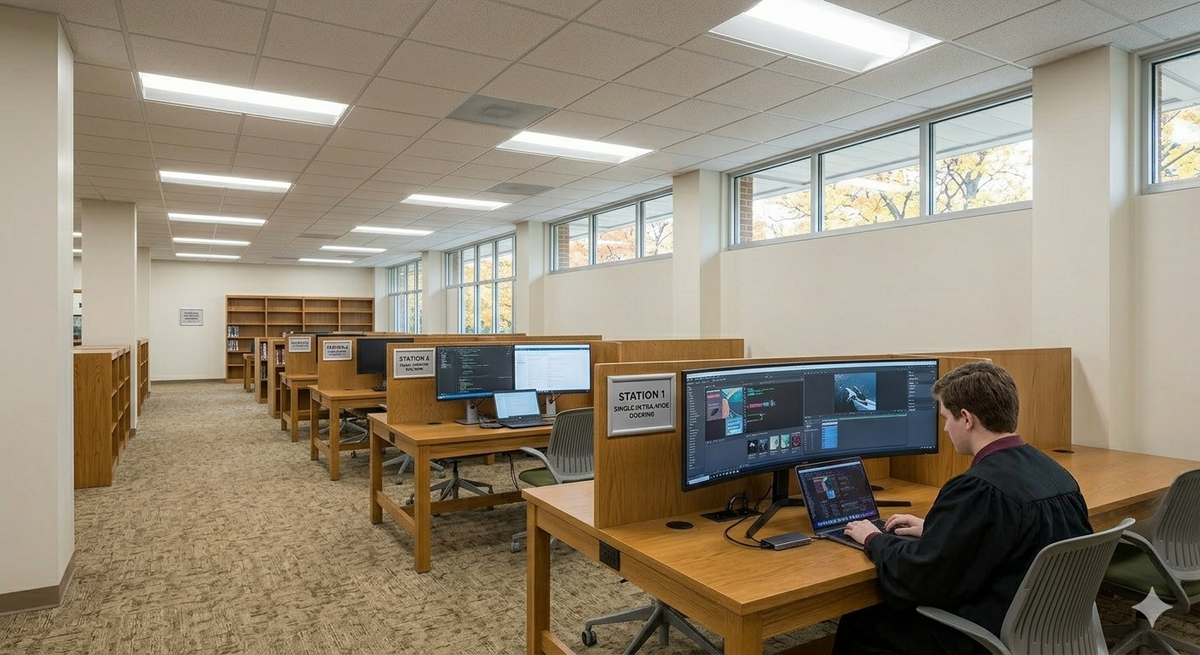
A “Collaboration Lab” and a “Collaborative Community Space” tied for the top scores, followed closely by plans for varied furnishings and large dual‑monitor docking stations.
To make room for the new spaces, the framework recommends evaluating the physical collection and reducing on-site volumes by 2% to 3% each year.
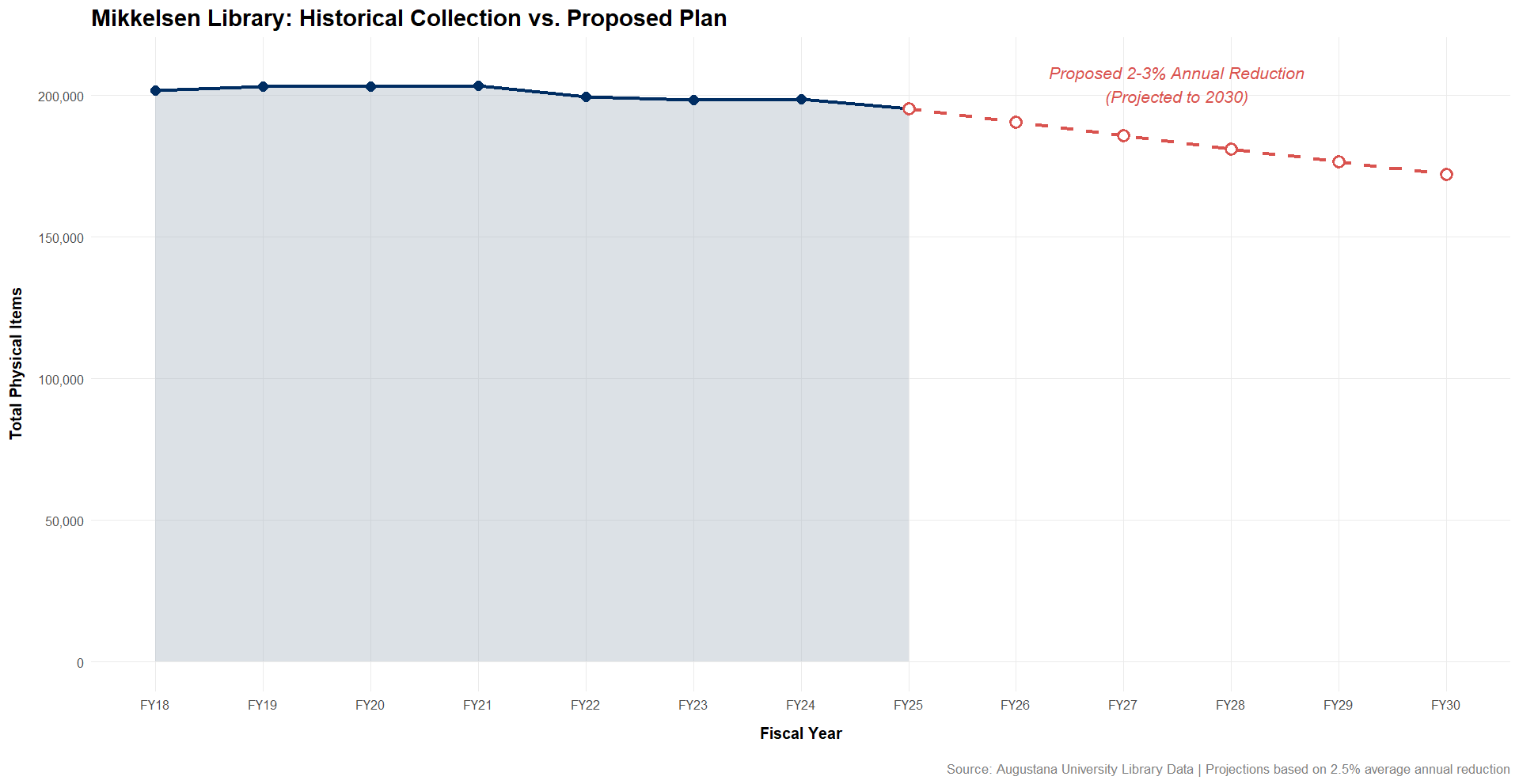
These proposed cuts are similar to reductions seen in previous years. According to the framework, the library will preserve “high-use, curriculum-supporting, unique, archival and mission-critical” materials while targeting obsolete items that have been replaced by digital offerings.
Recent library data reflects this strategy; withdrawals largely target less used formats. Of the roughly 3,200 total items Mikkelsen withdrew in 2025, the vast majority came from the “Media (audiobooks, cds, dvds, videos)” category, which fell from 7,961 to 4,740 items.
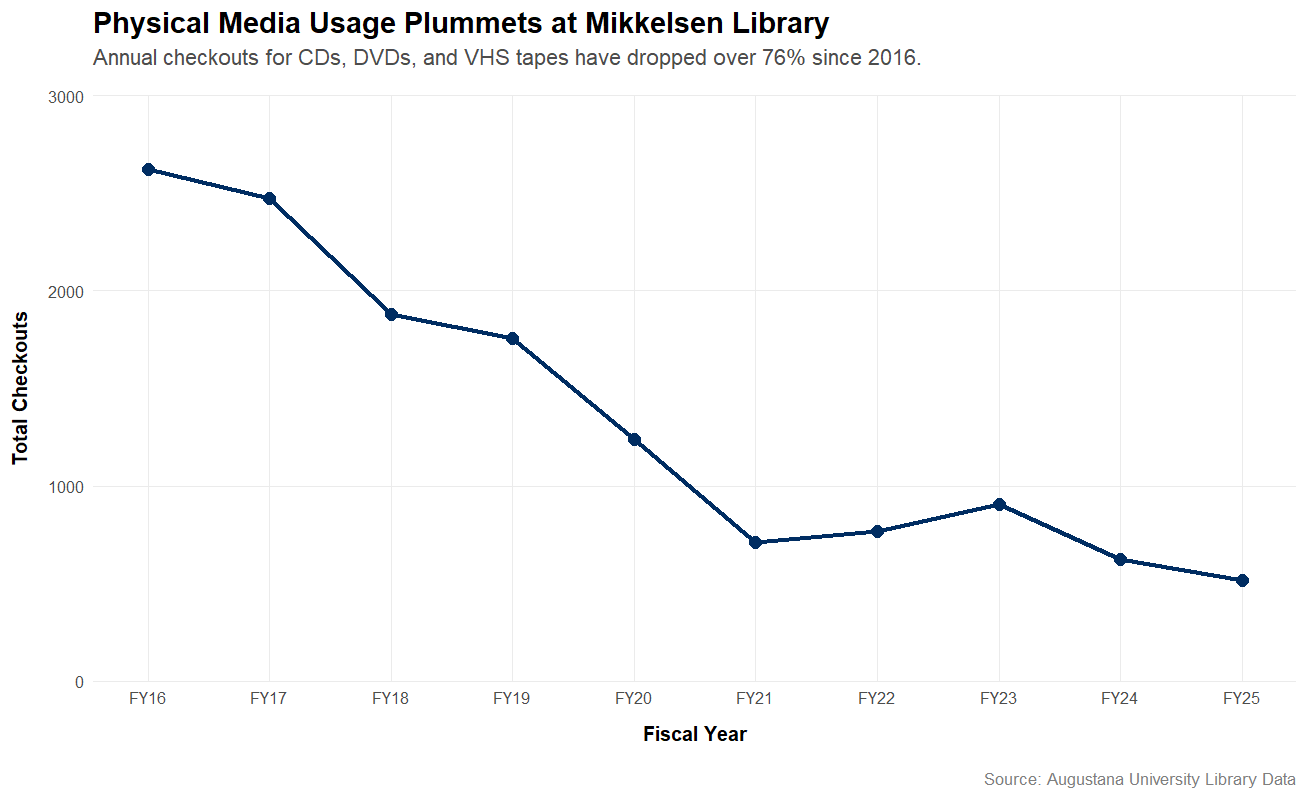
This reduction aligns with declining demand for physical media; circulation data shows media checkouts have fallen 76% from over 2,600 in 2016 to just 622 last year.
While the library did reduce its physical book count in 2025, the net reduction was 630 books, just 0.5% of its over 125,000-book collection.
Task force chair Peter Folliard said the group proposed a five-phase timeline. The plan suggests piloting low-cost concepts next academic year, hiring architects in spring 2027 and slating major construction for 2028 through 2030.
“Any plan is contingent on our financial health, which is impacted by so many factors, but the primary are our enrollment and retention, donor support and competing operational priorities,” Folliard said.
Folliard noted that the President’s Council will review the recommendations, but the final decision to approve and fund any construction rests with university leadership.
Pitching the final framework to the President’s Council brought added pressure for the task force’s student representatives, juniors Chilotam Okafor and Abigail Smith.
“There was some pressure to convey your ideas really well because this was kind of like the crux,” Okafor said.
While the task force now waits on administrative decisions, the representatives noted a contrast between the initial outrage around the group’s formation and the actual student engagement throughout the process. A November petition drew over 1,300 signatures, but Smith said she received almost no direct feedback following the public town halls in early February this year.
“Everyone is so excited to sign a petition and be mad about stuff,” Okafor said. “But when it comes to the whole process of following up and keeping updated and actively being involved, it’s just not as interesting as being angry.”
Despite what they see as the lack of sustained engagement and a compressed timeline, the representatives found value in bridging the gap between the student body and university administrators.
“I feel like I still wish there was more time,” Smith said. “But still, like, we worked hard. And yeah, we did good with the time we had.”
To move forward with the process, the university must commit to phased funding and authorize a new iteration of the task force for the 2026–2027 academic year.
As the process unfolds, Smith said she’s hopeful the library can evolve without losing its character.
“As much as we like tradition at Augustana, I think when change happens, it can be good if we just build on those traditions and make changes inspired by those existing spaces,” Smith said.