International students face difficult choices under new visa restrictions
As the White House continues to narrow F-1 visa access, many international students find themselves struggling to balance their academic ambitions with home country connections under the pressures of a national immigration crackdown and rising geopolitical uncertainty. Augustana’s Center for Global Engagement (CGE) is looking to adapt to recent policy changes to ensure the university’s international community remains strong.
Christina Sanchez, executive director of the CGE, said that despite increasing global hostilities, the office’s day-to-day operations and global initiatives have continued as usual. However, one policy issued by the U.S. Department of State in January 2026 has the potential to “severely impact” strategic planning moving forward.
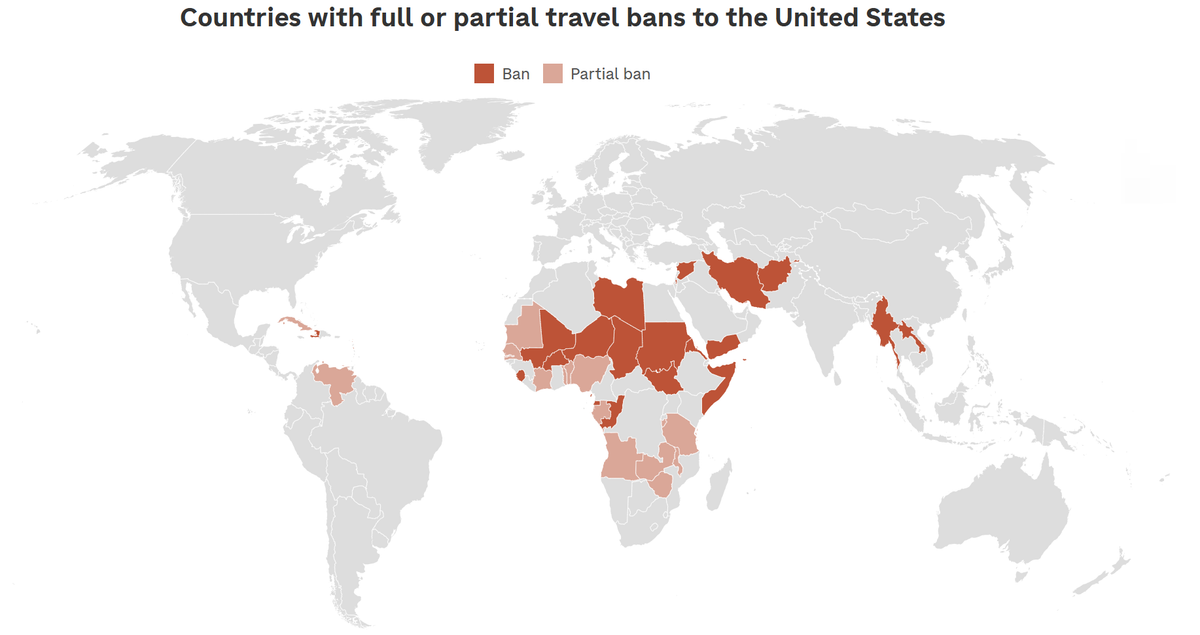
The policy in question, known as Proclamation 10998, suspended the issuance of all non-immigrant visas to countries on the Department’s expanded “entry-ban list,” barring students from these nations from coming to the United States.
According to Sanchez, Proclamation 10998 has forced a handful of international students into a difficult choice.
“If you’re on a ban list, you’re okay right now in the country,” she said. “But once you leave the country, it’s a different story. So as you can imagine, that adds a whole new level of complication for a student, especially if they weren’t already planning on spending their summer here.”
Currently, international students from Afghanistan, Iran, Somalia and 16 other nations must decide either to spend the summer in the United States to ensure their visa status is retained or risk losing it by returning to their country of origin.
Although the policy is facing legal scrutiny in courts, the CGE is advising students to remain in Sioux Falls this summer.
However, those who follow this advice face another set of hurdles: housing, dining and other living costs, which can create particular concern for unemployed students or those who are ineligible to work off-campus. In addition, on-campus jobs are limited both in number available and in hours offered.
Donn Grinager, director of international admission, spearheads the CGE’s on-the-ground recruitment efforts in Europe, the Middle East, Asia and Oceania. According to Grinager, these economic limitations exist not only for current students in the United States but also for prospective ones.
“The visa application costs them about $165 in application fees each time they apply,” Grinager said. “So, very quickly, students confront an economic reason to stop trying and to give up their dream of studying in the US.”
But the growing number of countries on the entry-ban list and the complications of financial uncertainty are not the only issues that could prove problematic for the CGE.
“Global sentiment and confidence towards the United States has been hindered,” Sanchez said, which incentivizes other countries to fill the void at a time when the United States is “not as strong in the international market.”
Sophomore Roji Parajuli, who is from Nepal, said that she chose to study in the United States in order to challenge herself.
“It’s a place where ambition is encouraged,” Parajuli said. “That environment really pushes me to become the person I’m trying to be.”
Sanchez praised the courage of students like Parajuli who choose to study in the United States, despite “rhetoric coming out of the United States which is not overly positive towards an international community.”
Parajuli said that this narrative is apparent to her, if subtle.
“It doesn’t always show up in obvious ways, but it creates a level of awareness,” Parajuli added. “You’re constantly reminded that you’re here on a visa.”
Amidst rising tensions nationally and internationally, Sanchez’s message to Augustana’s international students is to assure that the CGE is committed to “continued support and engagement and building a welcoming community.”