Arthur Olsen Research Symposium returns with 78 presenters
Classrooms across the Fryxell Humanities Center will be filled with student research presentations on April 25, as projects on topics ranging from neuroscience to vampire media are shared in sessions.
The annual Arthur Olsen Student Research Symposium will feature 78 student presenters across oral and poster sessions, representing fields from nursing and environmental studies to art and government.
“We want to showcase all the cool stuff that Augustana students have been up to, whether it's creative projects or research projects or whatever it is that they're doing, where they're finding interesting ways of applying the things they've learned in their classes to an interesting project,” George Nasr, symposium chair and assistant professor of math, said.
The event begins at 10 a.m. in Hamre Recital Hall with a keynote address from guest speaker Sara Lampert, titled “Why Amateur Theatricals Matter: Discoveries in the Records of a Gilded Age Men's Rowing Club.”
Lampert was selected through a rotating nomination process that highlights different academic divisions each year. This year, faculty in the social sciences submitted candidates for the committee to review.
“Several nominations were made, and then the committee reviewed all those nominations and made a decision of which speaker we felt would just be a good speaker, generally speaking,” Nasr said. “But we also do actually keep in mind the student audience. We do think about who we think the students would enjoy learning something from.”
Student presentations will follow from 11:35 a.m. to 12:45 p.m. in Fryxell Humanities Center classrooms, with a poster session from 12:45 to 2 p.m. in the Center for Visual Arts Halverson Atrium and the Fryxell Humanities Center concourse. Afternoon presentations resume from 2 to 3:10 p.m.
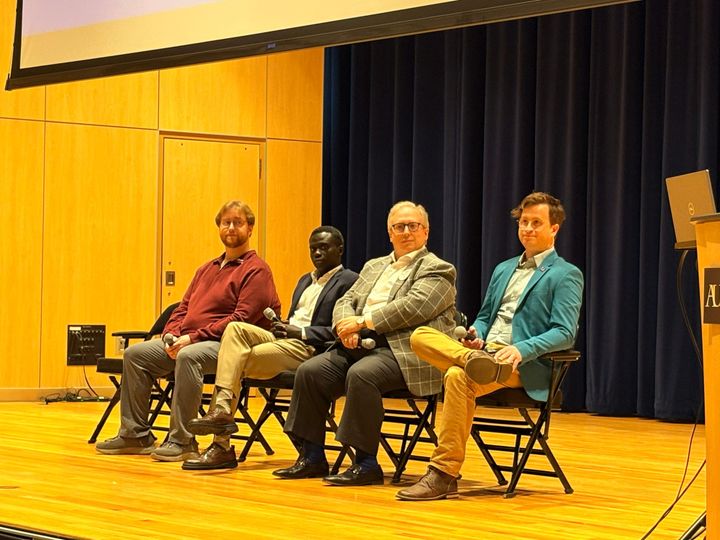
A new addition to this year’s symposium is showcasing the Beacon Fellows program, which partners students with local organizations to conduct community-based research. The program will host dedicated sessions featuring current students' work during the first two time slots in room 123 and an alumni panel during the final slot of the morning session.
“The vision for the Beacon Fellows Program is that students lead the development of the project, the design of it. They're the ones communicating directly with community organizations and then really doing the work to carry it out,” program director Suzanne Smith said.
The initiative began as a pilot five or six years ago and has since grown with endowed funding, allowing students to be paid for their research while providing services to community organizations.
“It's a benefit to the community because smaller nonprofits that might not be able to say commission or hire a research project can work with this program to get it done,” Smith said. “And it's a benefit to students because they get paid to gain research experience.”
Amina Koch, a senior triple-majoring in English, Spanish, and Languages, Literatures and Cultures, said the symposium has shaped her academic experience since her first presentation as a freshman.
Her first presentation was based on her first-year seminar final project, “Writing Outside of the Lines: A Study on Non-Gendered Pronouns in Modern English,” which examined the history and validity of singular “they.”
“That was what I think really made me fall in love with research, because I've always been, quite frankly, a nerd,” Koch said. “I love being able to not only conduct these investigations, but to be able to share what I found with others.”
Koch said presenting helped her see the broader impact of her work.
“It really made me realize just how powerful it could be to share what I was working on,” she said, adding that students who aren’t sure about presenting in the future should consider that they’d be “sharing their unique perspective.”
Nasr said the symposium also helps students build skills beyond the classroom.
“Being able to take complicated ideas and synthesize them in a way where you can communicate that with other people — that is a challenging skill in and of itself,” he said.
The event is open to all students, including those not presenting.
“You don't have to stay for the whole thing,” Nasr said. “You can pick and choose parts of what you want to see. I would just encourage people to just check it out.”