A survivor's calling to care
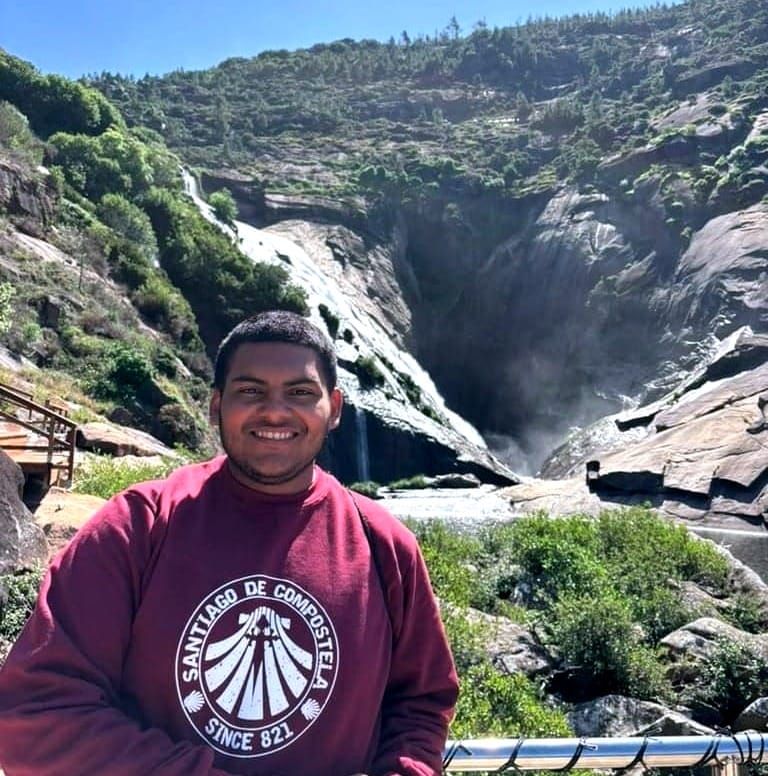
When Daniel Ramirez looks back at photos from his treatment, he barely recognizes the 14-year-old boy staring back at him.
“I look back, I'm like, that was not me in that photo,” Ramirez said. “It was a completely different person.”
In late 2020, COVID-19 put Ramirez in the hospital with pneumonia and left him immunocompromised. After nearly three months of weekly blood tests, his doctor sent him to an oncologist-hematologist.
By Feb. 26 2021, he had a diagnosis: acute lymphoblastic leukemia, a cancer of the blood and bone marrow — the most common cancer in children.
He was 14 years old. He spent nearly every day at Sanford Children's Hospital, unable to be near other people as chemotherapy weakened his immune system. His life, he said, was “put on pause.”
From then on, Ramirez said his worries were no longer algebra, geometry or an English class — that seemed superficial to him.
“I was old enough to understand what was happening around me, but still young enough that I wasn't living an adult life,” he said.
From then on, he was confined to a hospital room. Because COVID-19 and chemotherapy left his body unable to fight infection, he could not leave or talk to other patients. He watched YouTube channels of people going through cancer to understand what the drugs were doing to him, and he spent time in prayer and reading his Bible.
On harder days, the questions came. “Why am I experiencing this pain? Why am I taking these drugs?” he said.
For friends of Ramirez like junior Holden Jepperson, who has known Ramirez since high school, what stood out the most from Ramirez’s experience was how he carried himself.
“Through all of that, not once did he ever complain or give up, and you would never know what he was going through based on his attitude and perpetual kindness,” Jepperson said.
Cancer reaches everyone around a patient. Friends who were once close stopped calling.
Ramirez explained how some shut down out of fear, while others were just unsure how to approach him.
“The last thing someone needs is a distant friend,” he said.
Being there, he said, can be as simple as bringing a Diet Coke or celebrating accomplishments that sound ordinary: ‘I walked today,’ ‘I had the appetite to eat a meal.’ Sometimes it means simply listening.
By April, after months in the hospital, his body was free of cancer, but his oncology team kept him in treatment for more than two years to keep the disease from returning.
That summer, he visited the Children's Castle at Sanford every other week. Every time he went home, he saw the same children stay behind, including a 3-year-old boy.
Ramirez found himself asking God why.
“It was hard seeing him stuck and knowing no other life besides the hospital,” Ramirez said.
On June 21, 2023, 845 days after his diagnosis, Ramirez received his last round of chemotherapy. He rang the bell that marks the end of treatment.
From that day on, Ramirez said he never doubted he would be all right. But that certainty came with a weight.
A close family friend who grew up with his mother faced cancer alongside him. She had stage 4 kidney cancer. Unlike Ramirez, her diagnosis was terminal.
“I rang it for the both of us,” Ramirez said.
While Ramirez believes people talk about surviving cancer, he said few talk about the guilt that can follow. He wondered why he survived when so many others do not.
Over time though, he said he began to view the experience almost as a blessing.
“Most people might not think of cancer and God's grace being in one sentence, but I definitely see it as such,” he said.
He said it gave him empathy for people who others might not relate to.
“I might not be able to help their physical body heal,” he said. "But I can try to shed an ounce of light to them."
That empathy found a direction in the hospital, where the bond Ramirez built with his nurses made his vocation clear. The boy who left the Castle every other Saturday now studies to be a nurse.
Shonna De Jager, assistant professor of nursing, described Ramirez as personable, collaborative and conscientious.
“Daniel has displayed many of the qualities that we are looking for in a nurse, including leadership and commitment to lifelong learning,” De Jager said.
Now in his first semester of Augustana's nursing program, he sees a gap from the other side of the bed: adults with cancer, he said, often lack the explanation children receive.
At the clinic where he works, a middle-aged man early in chemotherapy had questions about his port. Ramirez, a student, could not give medical advice, so he shared his own story.
“Don't be afraid of that," he told the man. "It's going to feel tender.”
Most people see cancer as dying. Ramirez came to see it as another way of living.
“If you don't ask the questions or you don't get involved with what cancer truly is, you will always think of the dying real person on a deathbed,” he said.
Now three years out of treatment, Ramirez said cancer will always be part of his story, but it does not define him.
Jepperson said many of his most memorable experiences with Ramirez have nothing to do with cancer — they involve Ramirez’s passion for messing with people, or “trolling,” as Ramirez puts it.
“Daniel is so much more than what he has had to overcome,” Jepperson said. “Yes, he may have beaten leukemia, but on top of that he is also unbelievably smart, kind, down to earth, understanding and funny.”
“I don't want people to see me and say, ‘Oh, that's Daniel. He had cancer,’” Ramirez said.
The rest of the description, he said, should start somewhere else: who he has become since beating cancer.