
Viking Oasis undergoes $20,000 makeover
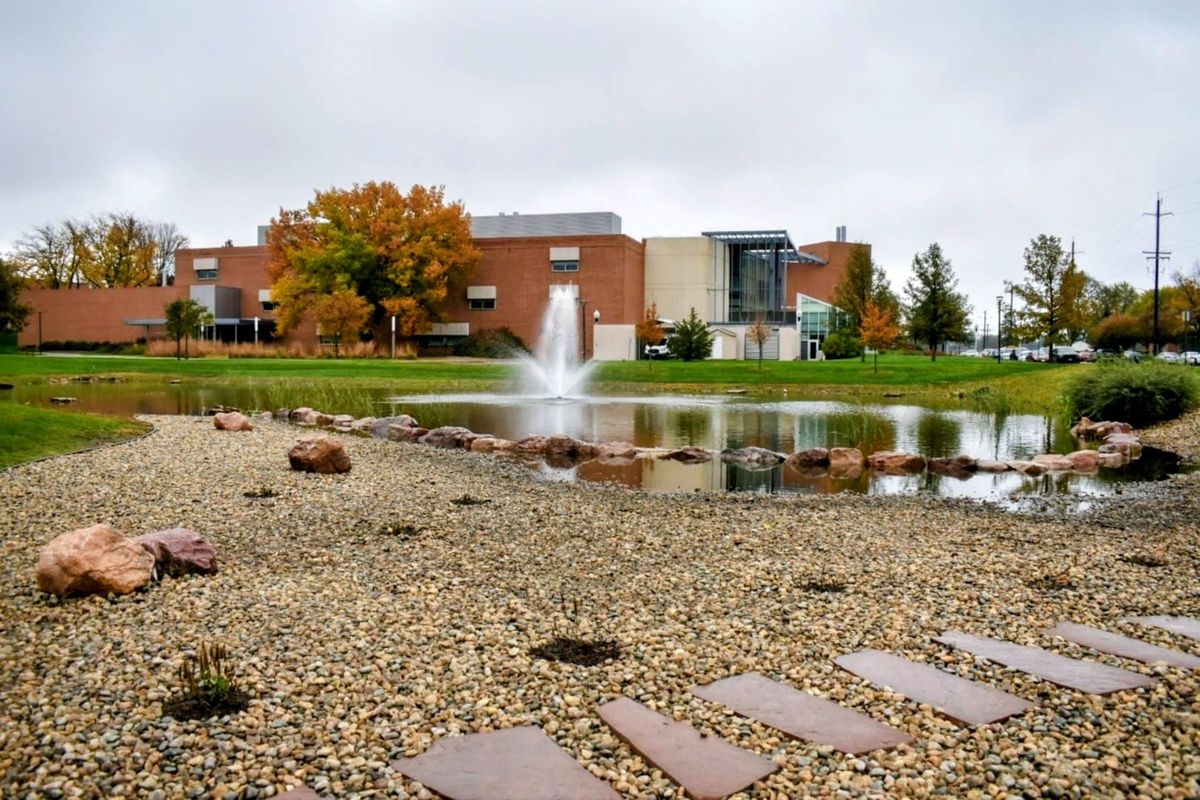
Construction on the second phase of the Viking Oasis’ $20,000 shoreline renovation will pause until spring after heavy autumn rains tested the pond’s newly lined southwest bank.
The two-phase project aims to improve Campus Green drainage and eliminate muddy weed patches around the pond, but as the weather changes, crews are shifting their focus to winter snow removal before completing the project.
Completed in early September, phase one consists of new rock work on the Viking Oasis’ southwest side, a walking path, seating stones and larger stones around the edge of the pond to help maintain the shoreline. Phase two will extend the rock feature and seating stones along the remainder of the west bank and part of the north side while incorporating aquatic plants.
“The biggest obstacle was just rain. There was no rain all summer, and we then got quite a bit of rain when we were ready to go,” Whitney Jibben, director of Facility Operations, said. “But overall, the project has gone pretty easily.”
Jibben said the project was organized into two phases to ensure each new element functioned as intended before moving on to the next stage. More heavy rain gave facilities a chance to evaluate how the initial stone work held up.
“It’s holding up pretty well, but I think there might be a couple of changes that we make just to offer a little bit more drainage,” Jibben said.
Facilities has received a quote for phase two. Chief Financial Officer Shannan Nelson, who oversees adjustments to the campus master plan, will give the final sign-off before crews resume work in the spring or early summer.
The work is part of the broader Campus Green project, financed through a bond package Augustana University took out in 2021 that also funded building Wagoner Hall and renovating Bergsaker and Solberg halls.
The Viking Oasis, more commonly referred to as the “Aug Bog,” was originally built as drainage infrastructure during that 2021 Campus Green overhaul.
“Previously, the campus green was just a green space,” Jibben said. “It had kind of like a culvert that ran through the middle and wasn’t really entirely usable because it stayed pretty soggy.”
To flatten the lawn into practice space for Recreational Services, Augustana installed an underground stormwater system that channels runoff into Viking Oasis, with pond overflow routed underneath 33rd Street via a culvert into a second retention pond beyond Midco Arena.
Over time, standing water around the pond’s edges killed the grass and left weed patches—prompting this year’s shoreline overhaul. Working alongside Augustana landscape coordinators Matt Nelson and Talyn Garry and contracted landscaper The Yard Barbers, Jibben’s team aimed to improve drainage around the basin and beautify campus while maintaining biodiversity.
Although it wasn’t a main goal of the project, Jibben also mentioned that Viking Oasis is now more accessible for people of all abilities.
“I know it’s pretty steep in that area, so to get down there is still a little bit difficult, but for the most part, it’s headed in the direction of a little more accessible,” Jibben said.
Gabrielle Erickson, a senior admissions ambassador, said that guests touring campus often talk about how beautiful the Campus Green is, particularly in the fall and springtime. She also said that the Viking Oasis is a focal point for belonging on campus because of the jokes and stories surrounding it.
Margaret Vogel, president of Augie Green, noted that while drainage function has improved, the balance between beautification and biodiversity is where things start to clash. Vogel said she hopes Viking Oasis will embrace an unmanicured aesthetic and integrate native plants to create shelter and food for campus wildlife.
To preserve wildlife habitat, Jibben said no additional rock phases are planned beyond phase two.
“The hope is that the east side and what’s left of the south end will remain more of a natural bank so that there is easy access for the turtles and the ducks that we’ve had on campus, to kind of give them a little bit more of a grassy area that they can hide in,” Jibben said.
Beyond campus wildlife, the pond draws visitors from the surrounding neighborhood. Garry noted that off-campus community members stop by to photograph the water and local children occasionally play around the bank.
As crews wait for spring to finish the shoreline, Jibben said Facility Operations welcomes student input on future additions to the space.
“It’s all our campus, and we can all care for it in different ways,” Jibben said. “If there’s ever things that students want to partner up with or want to see, we’ve been really open to figuring out how we can make that happen.”