A community on the pitch: soccer brings East African students together
When Natnael “Natu” Goitom moved to South Dakota at eight years old, soccer was the familiar thread connecting his past in Eritrea to his new home in the Midwest. Now a senior at Augustana, Goitom’s love of soccer has helped him thrive.
“I fell in love with soccer, genuinely. It has a special place in my heart,” he said. “I grew up playing. All my friends basically from middle school forward were people I played soccer with.”
Goitom’s journey mirrors a cultural phenomenon across the region: the booming prevalence of soccer within the Midwest’s growing East African diaspora. What starts as informal pickup games back home has evolved into a web of college club teams, community leagues and national summer tournaments that offer these students a sense of belonging.
For many East African students, soccer is not simply a hobby picked up in college. It is deeply woven into their childhood memories.
Eyoel Gedion Taffesse is a senior from Ethiopia and member of the club soccer team this year.
“Back home, the way most of us used to bond, especially as boys, was through playing soccer,” Taffesse said. “When we came here for the first time we were surprised that there were so many Ethiopians here. Just the fact that the community was even that big in the first place.”
Goitom noted that the sport’s accessibility makes it uniquely suited to bring people together.
“It’s such a cheap sport. You don’t really need equipment — just a ball,” Goitom said. “And once we come here, everybody’s already played it growing up. It’s something we already knew.”
The local Ethiopian community in South Dakota has expanded rapidly in recent years. Goitom sees this reflected in how the older generation invests in the youth. He said that beyond traditional community gathering places like local churches, the community hosts summer programs like youth soccer camps for children. He believes that having an established network actively supporting youth sports creates a steady bridge between generations.
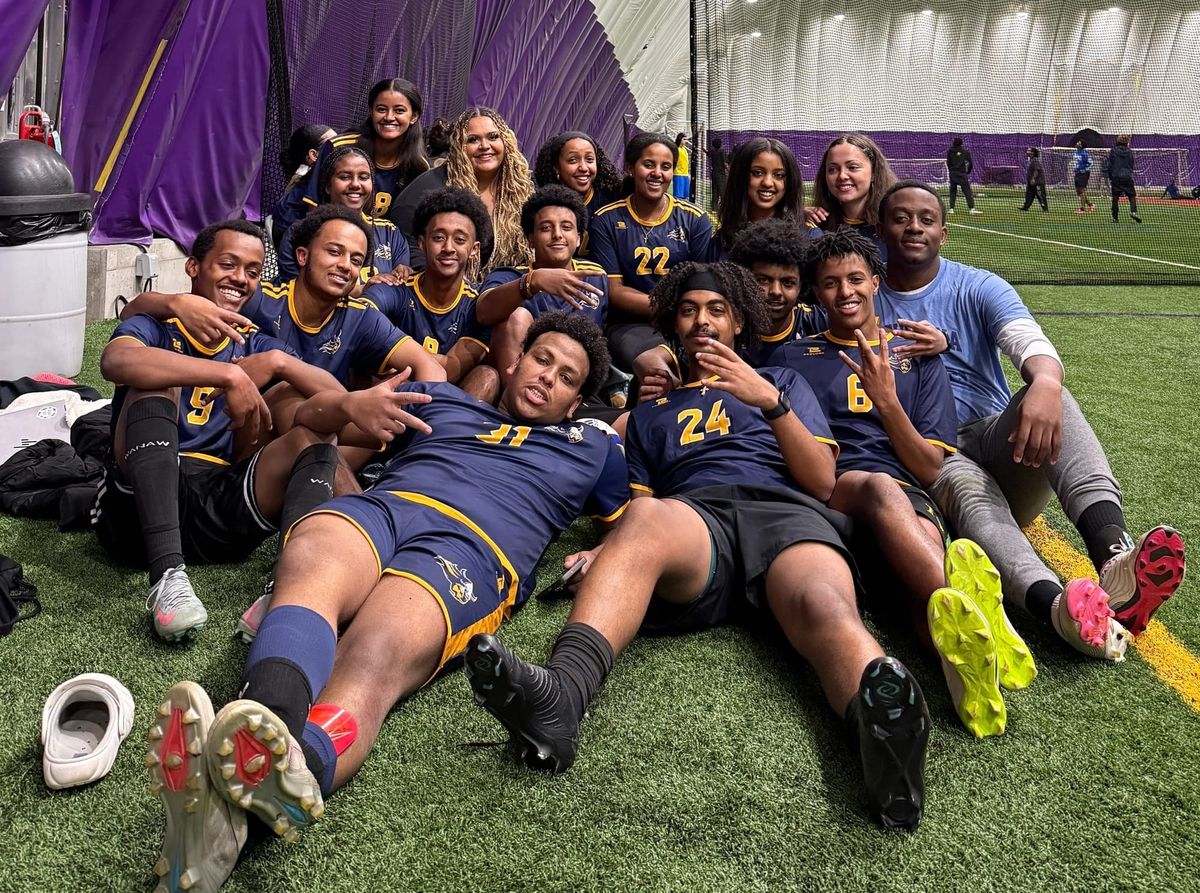
On campus, that cultural passion has transformed Augustana’s men’s club soccer. According to Goitom, out of 23 roster spots on the club team about eight players are Ethiopian. In the starting lineup alone, seven out of the 11 players share Ethiopian heritage.
The program was far more informal when Goitom joined his freshman year, run almost entirely by a single student leader. He recalls early road trips like an eight-hour drive to Minot, North Dakota, where the small squad bonded over shared meals and jokes on the road despite tough losses.
Now, the club has transformed into a structured program.
“We started integrating coaches, set captains and set rules like if you don’t show up to practice you don’t get to play,” Jordi Lubula Nsenga said, a junior goalie from South Africa who joined the club two years ago.
Beyond club play, Goitom, Taffesse and Nsenga have all expanded their horizons to the region’s primary hub for East African soccer: the Ethio Sioux Falls club.
Originally formed in 2015, Ethio Sioux Falls was revitalized five years ago and now serves as South Dakota’s sole representative in the Ethiopian Sports Federation in North America (ESFNA) — a massive, annual summer tournament that rotates across major U.S. cities. The organization also hosts an inter-state exhibition tournament in Mankato every November to keep regional ties strong.
That shared heritage creates a unique sense of family. Goitom said he and his teammates gather before practices every Sunday and usually go out for a meal together afterwards.
“When I first joined the league in high school, I was the youngest guy on the team,” Goitom said. “They treated me like their son; I was the baby of the group.”
For Nsenga, being surrounded by African teammates was a blessing while adapting to life thousands of miles from home.
“Being almost 36 hours away from my home, having soccer here reminds me of how I grew up,” Nsenga said. “Besides actual soccer, there’s “after soccer” where we just hang out, laugh and talk. There’s a sense of being free. Soccer is just that glue that keeps us together.”
That desire for community extends to everyone on campus. Taffesse emphasized that while soccer brings the East African diaspora together, the ultimate goal is inclusivity.
“We don’t want anyone to feel left out,” Taffesse said. “And we don’t want soccer to just be an Ethiopian thing — we want everybody to be included.”
Whether playing in regional intercollegiate exhibitions or going out for dinner together after practice, soccer serves as an anchor for African students navigating life away from home.
“Our goal is to learn to play with each other here, join Ethio Sioux Falls, put ourselves in the starting lineup together and end up winning the tournament,” Nsenga said.