Behind the scenes at Ronken: What it takes to run gameday
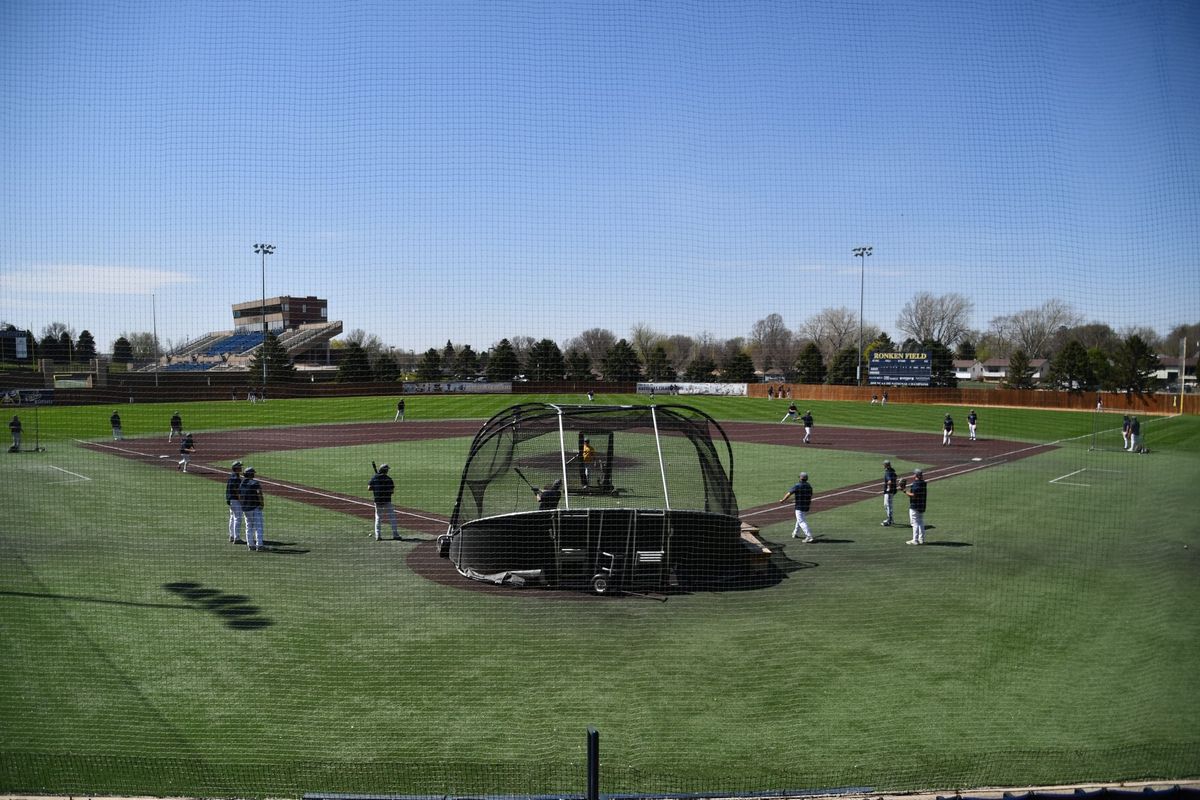
Hours before the first pitch is thrown, Ronken Field bustles with activity. Student athletes position the bases, set up the dugouts with equipment and walk the infield to inspect the turf for imperfections, while operations staff and students go through their checklist of duties to organize the facilities long before fans arrive.
Gameday operations are a key part of any sporting event, but fans rarely get to see the work that makes these events enjoyable. Much of the fan experience is carefully planned before they arrive.
“Marketing and promotions, whether it’s T-shirt giveaways or the script during the game, all of that is put together ahead of time,” head game coach Tim Huber said. “Fans just show up and enjoy what happens.”
The staff of a dozen students and faculty are all working in multiple areas all at the same time, which requires a great amount of coordination and effort. In the press box, a few staff members power up the monitors and set out the headsets for broadcasters and game announcers while they also lay out box score sheets for stat keepers.
Meanwhile, other members of the staff stock up concessions with food and drinks and prep the ticketing booths to make sure that the scanners work so that everything is ready before the gates open.
Down on the turf, baseball players are focused on field preparation, dragging the turf until the surface is even, placing bases and setting up hitting stations along the foul lines.
“Our guys know what needs to go where, and they know to get the screens out so we can take batting practice,” Huber said. “It’s no different than practice, really.”
Kyle Huffman, the athletic event manager, explained that his role is constantly changing depending on the game, comparing himself to a Swiss Army Knife.
“Wherever the need is, really,” Huffman said. “One day I might be running the scoreboard, another day I might be taking tickets, kind of wherever I’m needed.”
All of these duties must come together like gears in a clock, each turning at the right moment for everything to work.
As the first pitch nears, preparation now transitions into execution. Players finish preparing the field prior to the beginning of warmups while the gameday crew finishes their final checks around the facility making sure the scoreboard works, emptying trash cans and setting out signage.
Once the players take the field, staff members remain ready, making any necessary changes to ensure that the game runs smoothly. Soon the gates will open, and fans will begin to file in and fill the stands.
After starting lineups are announced and the final note of the national anthem rings out, the quiet buildup of the moment gives way to the start of the game.
With the game underway, the crew does not get a chance to let their guard down, and their focus shifts to maintenance. They assist both in the press box and around the facility with ticketing, concessions and equipment management, making sure everything stays in order as the game progresses.
Luke Groth, senior associate athletic director for operations, said fans expect certain things when they pay to go to a game, whether it’s a hot dog from concessions, a merch giveaway or clean restrooms.
“You start taking one or two of those things away, and it starts to show,” Groth said. “It’s not the product that Augustana wants to put out.”
The game continues, and the crew carries out its work in the background. However, fans may see them in case any bases need to be replaced or any turf issues need to be remedied, such as fixing damaged turf seams or leveling out the small bits of rubber infill.
“Sometimes curveballs come at us, and we have to adjust on the fly,” Groth said.
These “curveballs” come from changing weather, equipment issues and other challenges that come up during play. These quick jobs are often handled between innings so as not to interrupt the flow of the game
Once the final out is recorded and both teams shake hands, teardown can officially begin. As fans begin to leave and the noise of the crowd slowly fades, players and staff remain behind cleaning both the field and around the facility, getting everything ready for the next game.
Players help by pulling up the bases and cleaning the field while the rest of the operations staff take care of organizing the equipment, cleaning the facility, picking up garbage from the stands and shutting down the ticketing booths and concession stands. The crew then completes one last walkthrough before finally going home.
When the last lights are shut off and the gates close, Ronken Field returns to the same quiet state it started the day in, patiently waiting for the next game to bring back the roar of fans and the crack of the bats.
For the gameday crew, much of their schedule remains the same with early preparations and post-game clean-ups. However, the unique thing about sports is that each game will present its own set of challenges to face, requiring members of the staff and players to be ready for anything.
“I play a small role in our student athletes’ success, but it’s something they appreciate,” Huffman said. “I just want coaches to focus on coaching and let me deal with everything else.”
Groth said he cannot understate the importance of these workers.
“Without any of the staff, the game doesn’t happen,” Groth said.