International recruitment adapts amidst global tensions
International recruiting is challenging during the best of times. With recent conflict in the Middle East disrupting flights, the Center for Global Engagement (CGE) has had to adapt their recruitment strategy.
Director of International Admission Donn Grinager was on a routine trip across Europe, Asia and the Middle East to engage with potential students when a series of U.S.-Israeli airstrikes targeted Iran on the morning of Feb. 28. The resulting counterstrikes from Iran closed airspaces across several parts of the Middle East and disrupted thousands of flights, including Grinager’s.
Grinager intended to travel from Amsterdam to Kathmandu, the capital of Nepal. But since there are no direct flights from the Netherlands to Nepal, he planned to take one flight from Amsterdam to Dubai, followed by another from Dubai to Kathmandu.
After finishing his work in Nepal, Grinager would then travel to Karachi, the capital of Pakistan. Karachi does not have a direct route from Kathmandu, though, which means that Grinager would then schedule another set of connecting flights through the United Arab Emirates—one from Kathmandu to Dubai, and a second from Dubai to Karachi.
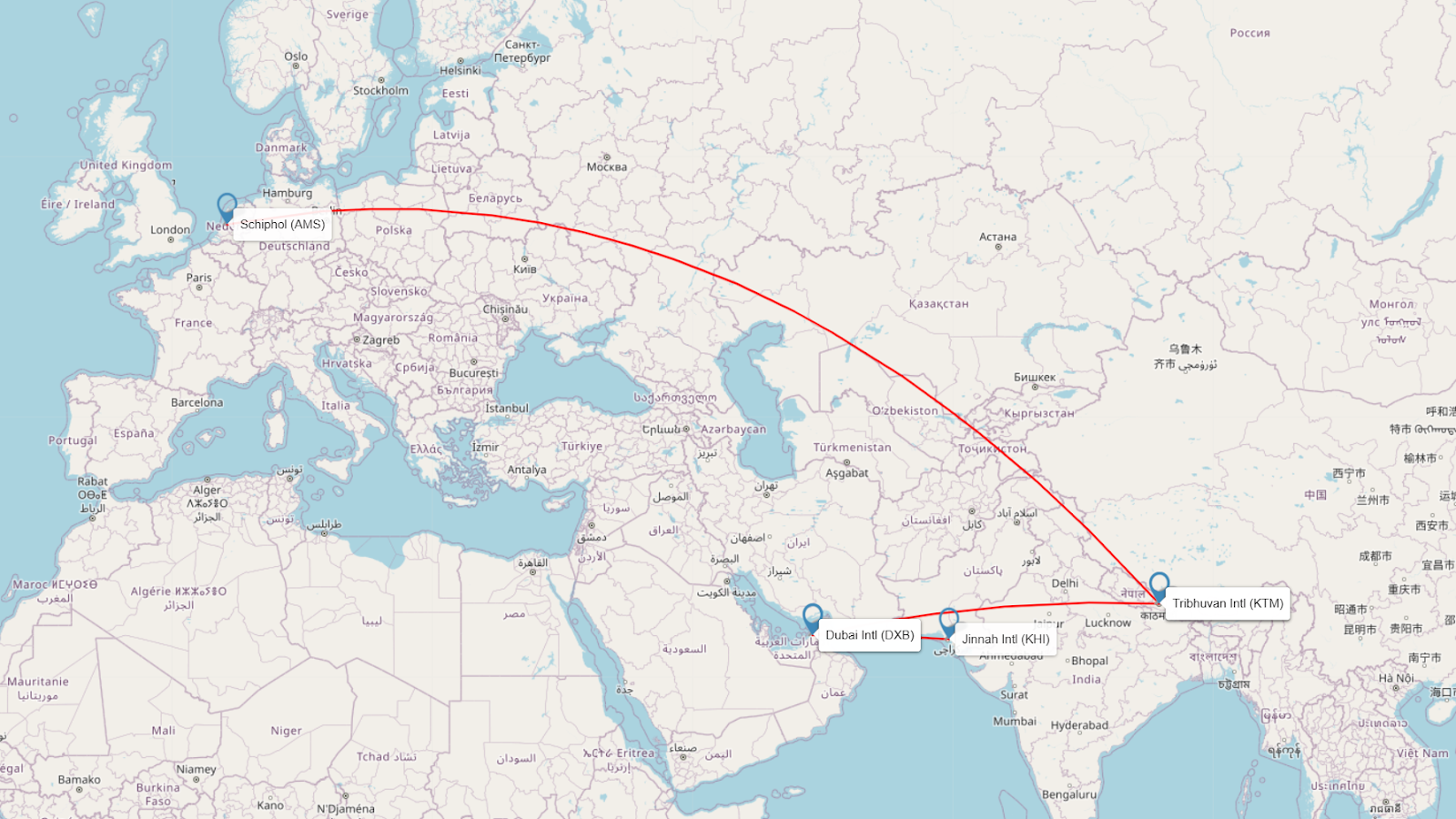
All in all, Grinager’s intended route would have entered Iranian airspace three times, and with the safety concerns involved, the Nepal portion of the trip had to be cancelled.
In spite of the setback, Grinager made a new plan.
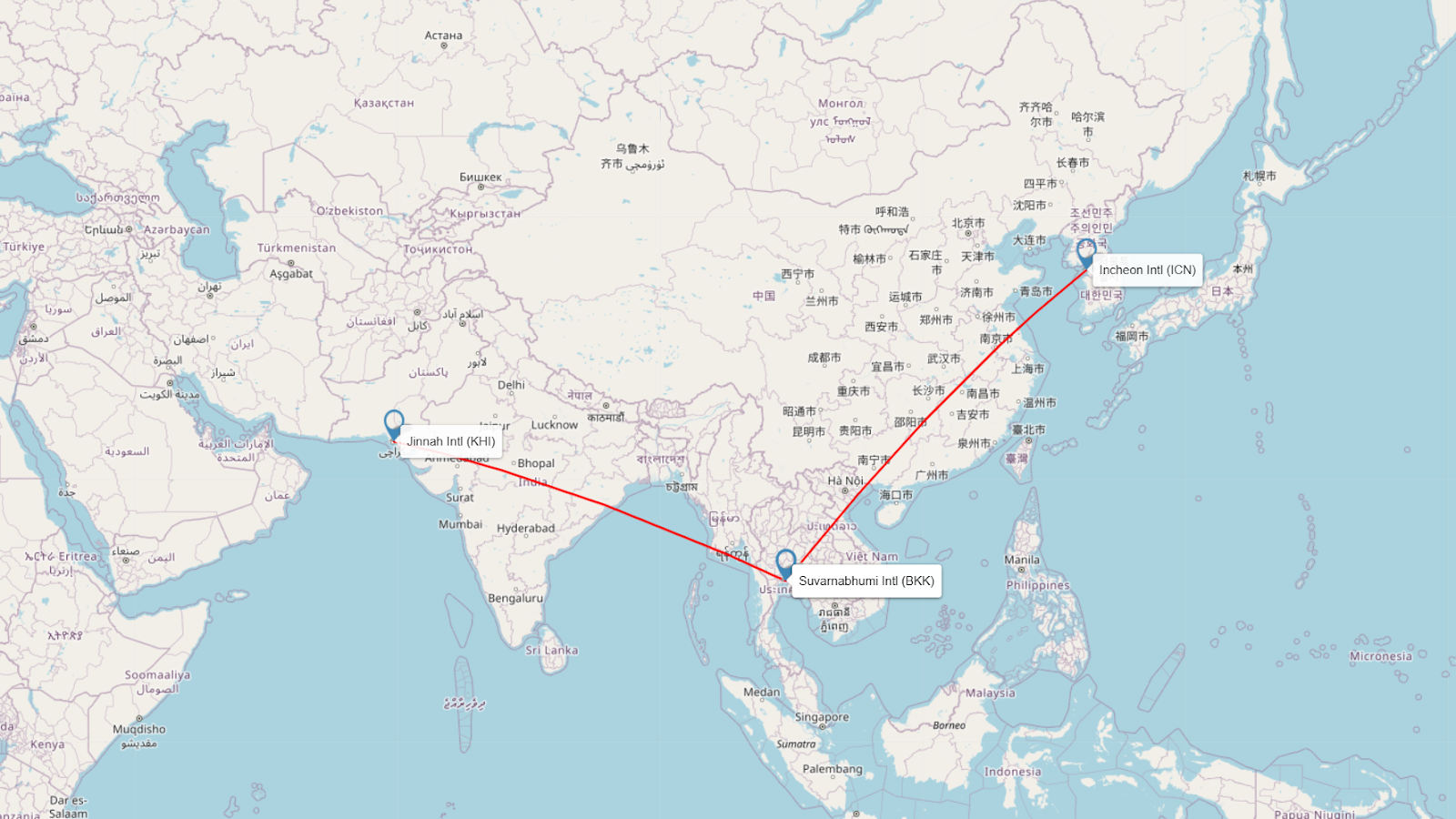
“I went the other way around the world,” he said. “I went from Minneapolis to Seoul, Korea; Seoul to Bangkok, Thailand; and then Bangkok to Pakistan. That way, I avoided flying over Iranian airspace.”
Grinager said that in addition to the challenges posed by active conflicts between nations, international recruiting is affected by a variety of other factors, including domestic policies on visas, world affairs and even the value of the dollar.
“When the dollar gets stronger and you’re dealing with a foreign currency, it becomes more expensive for students from Ethiopia or Nepal or Brazil or Norway to be able to afford us,” he said. “So the strength of the dollar can be a big challenge.”
Senior Abel Alene, who is from Addis Ababa, the capital city of Ethiopia, found that Augustana was still the best option among other U.S. schools, even with the challenges posed by the strength of the dollar.
“After applying to Augie, I got accepted. I got accepted to other schools too, but this ended up being the most affordable one,” Alene said.
While the recruiting trip did not turn out how it was originally planned, Grinager maintains the importance of being able to stay engaged in the international recruiting scene, even when outside factors make the task more difficult.
“Despite some of the tensions and challenges, our thought and our strategy is to stay engaged and to be [present],” Grinager said. “And if you, in my opinion at least, disappear from a market during a low, it’s really hard to take advantage of the highs when they come back.”
Christina Sanchez, executive director of the CGE, knows that there are workarounds that the recruitment team could take instead of traveling abroad, such as meeting with students digitally. Despite the streamlined recruitment process these tactics could offer, Sanchez emphasized the importance of meeting with students in person to develop relationships.
“Some schools have gone away from physical recruitment and gone to what’s called armchair recruitment, where you stay put, you never travel, and you do as best you can,” Sanchez said. “But the nuance with recruitment that we see — and I think we even see it within the U.S. — is that it’s such a personal, intimate and impactful decision for a student to make.”
Alene emphasized that after making the decision to attend Augustana, he was surprised by the amount of engagement taken by the International Programs Office (IPO) (the former title of the CGE) to prepare students for their arrival.
“The IPO was super helpful in giving out information,” Alene said. “They made sure we were very knowledgeable and knew what we were doing.”
Much of the airspace in the Middle East has remained closed since the initial strikes on Iran, which will continue to add a layer of difficulty to Grinager’s upcoming trips. In spite of this and any other setbacks that may occur during this year’s recruitment season, Grinager remains hopeful that the CGE’s efforts will be as successful as they have in years past.
“Given everything that’s going on right now — politics, world conflict, world affairs, strength of the dollar — to be where we’re at, we’re actually feeling pretty good,” he said.