Rethinking ASA transportation
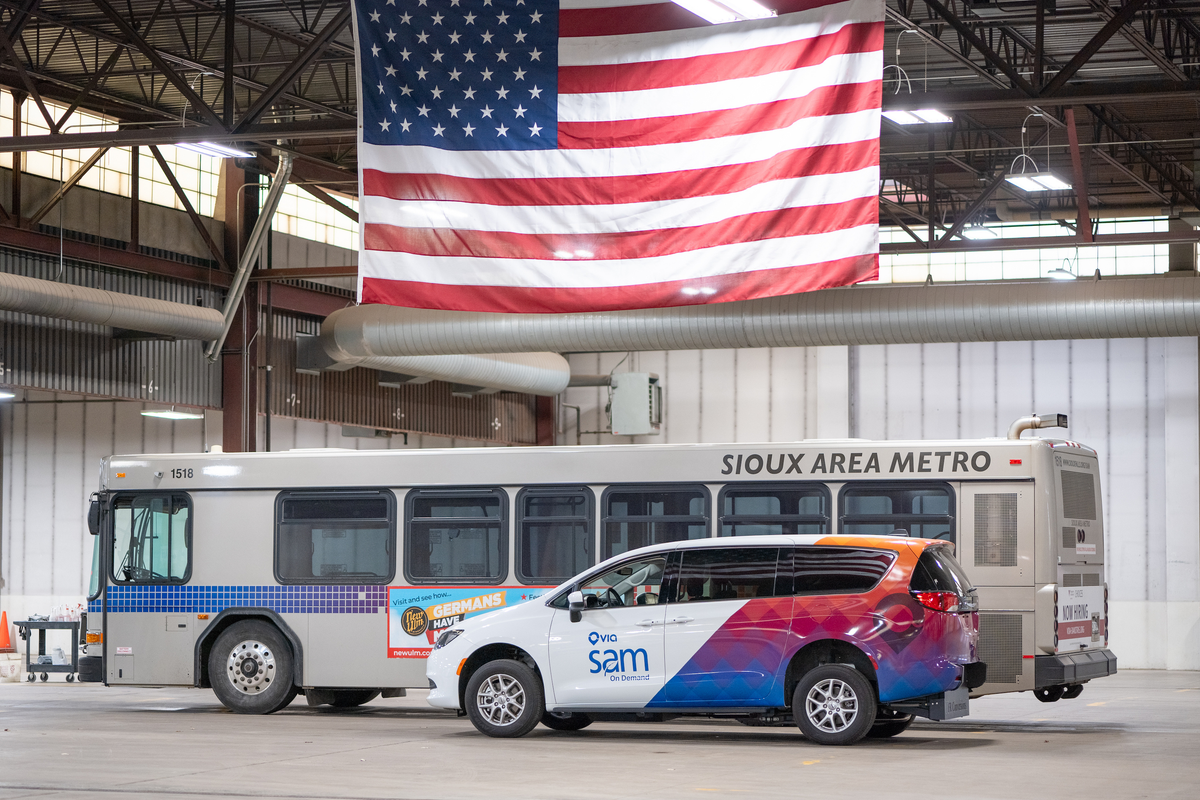
The Augustana Student Association (ASA) is attempting to “hit reset” on their current transportation system. Following the suspension of the Lyft program, ASA is now pivoting toward Sioux Area Metro (SAM) and Uni Go.
At the end of the fall semester, ASA faced student backlash over the pausing of the Lyft program, which was intended to allow testing of SAM.
The feedback resulted in the institution of “emergency Lyft passes” through Jan. 31 and the creation of the J-term Transportation Committee.
The goal of this committee was to evaluate transportation options and make a recommendation to administration, who will determine which program is chosen.
First-year senator and committee co-chair Ayden Calvert said that reevaluation was necessary.
“We realized that all of us kind of need to hit a reset on our preconceived notions and take a very objective stance by starting at the beginning,” Calvert said. “We went from the very beginning of absolutely everything to look through what worked, what didn’t, where can we supplement, and also what control does ASA have moving forward, to try and come up with the best solution.”
The committee’s other co-chair, second-year senator Nina Luz, expressed her goal of trying to smooth over uncertainty for current students surrounding their transportation options.
“Our duty, and from my point of view, was basically to help in this transition, not to make decisions for the future,” Luz said. “So we’re just trying to give tools in the meantime that all of this process is happening, so we could support the students who don’t have any other form of transportation.”
Luz said that the committee considered offering Lyft passes for the current semester as a transition period, a possibility which she supported. This option was deemed too expensive, and the Lyft pass program currently remains inactive.
Calvert said that the committee focused on three main transportation possibilities. In addition to Lyft, it evaluated the Uni Go app and SAM.
According to Calvert, ASA has known that Uni Go would be instated as a transportation option since the beginning of fall semester, a decision that was handed down from administration. The app’s first trial period went live in late February.
“Our main responsibility as it related to Uni Go was how to make Uni Go successful,” Calvert said. “And now that Uni Go’s launched, it’s beginning to raise a lot of questions and concerns of, well, you create a platform, now how do you get students to buy into that platform and to use it?”
Luz confirmed that so far, Uni Go is seeing less activity than the committee would like. She believes low interest might be due in part to liability and consistency.
According to Luz, student drivers could be left responsible for passengers’ healthcare expenses in the event of an accident. For students seeking rides, the prospect of relying on others’ willingness to sign up and work as drivers is less stable than other solutions.
With Lyft paused and Uni Go working through its early stages, the committee turned to SAM.
Calvert said that SAM recently underwent a change in parent companies to a company called Via, which has resulted in technical improvements he called “enormous.”
These improvements change SAM’s bus lines to cover more of Sioux Falls. Via is also optimizing how bus routes interact with SAM On Demand, a service that uses vans to reach where buses do not. This has reduced SAM route times from 60 minutes to 30, with the eventual goal of getting down to 15 minutes per route.
Calvert said that these changes have made him “more confident” in SAM’s viability.
In collaboration with SAM, the committee looked into the possibility of an Augustana-specific bus route, which would run to and from students’ frequently visited locations. Committee members will meet with a SAM representative on April 8 to receive a cost estimate for opening a designated Augustana line.
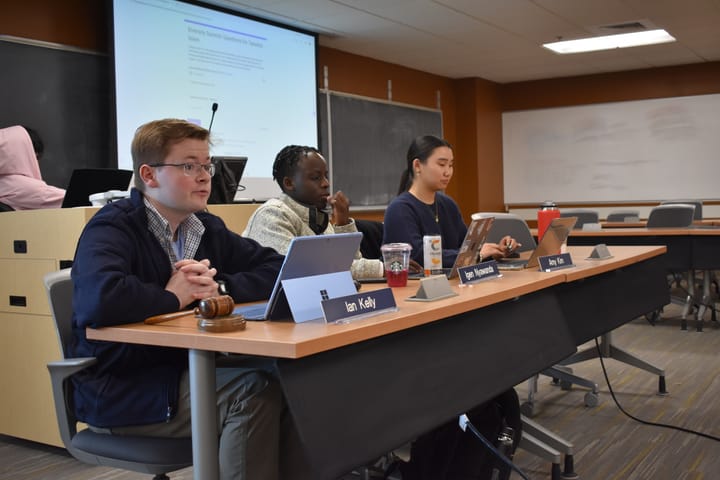
The committee presented their findings during the Feb. 15 senate meeting. They identified four major categories of transportation needs: work and internships, grocery shopping, religious events and medical emergencies.
Calvert and Luz decided upon the use of a university-specific SAM route as the long-term goal for all of these needs, except for medical emergencies.
Luz said that for many students without personal transportation, calling an ambulance in an emergency is often not seriously considered because of its cost; however, these students still need a fast, reliable transportation option.
For this reason, the committee met with Associate Vice President of Campus Safety Rick Tupper to discuss the possibility of allocating a small number of Lyft passes directly to Campus Safety for students experiencing a medical emergency.
According to Luz, this would allow Campus Safety to help identify emergencies, which was the committee’s primary concern in choosing Lyft as an option for such situations. Together, Campus Safety and the committee put together a list of symptoms that do and do not constitute an emergency. Luz said Tupper was in favor of the solution.
As Augustana decides whether to invest in a SAM route, the committee identified short-term transportation solutions for non-emergencies.
For grocery shopping, the committee established a partnership with ASA’s Housing and Dining Committee, which already provides ethnic food tours. For internships, the committee will collaborate with the Student Success Center (SSC); for other work, it identified SAM On Demand as the best option. Uni Go was chosen for religious events.
The committee plans to continue the partnership with the SSC to supplement transportation for internships.
To help fund these long-term goals, the committee hopes to repossess $9,000 that was previously given to the Center for Global Engagement for the purchase of a 15-passenger van, an idea that never got off the ground for insurance reasons.
With this money, ASA would invest $7,500 in SAM, dedicate $500 to Lyft passes for Campus Safety and give $1,000 to the SSC for the transportation partnership. As of mid-March, the repossession of these funds had not yet taken place.
For now, students in need of transportation will have to rely on these short-term solutions as ASA prepares to meet with SAM.