ASA changes RSO funding
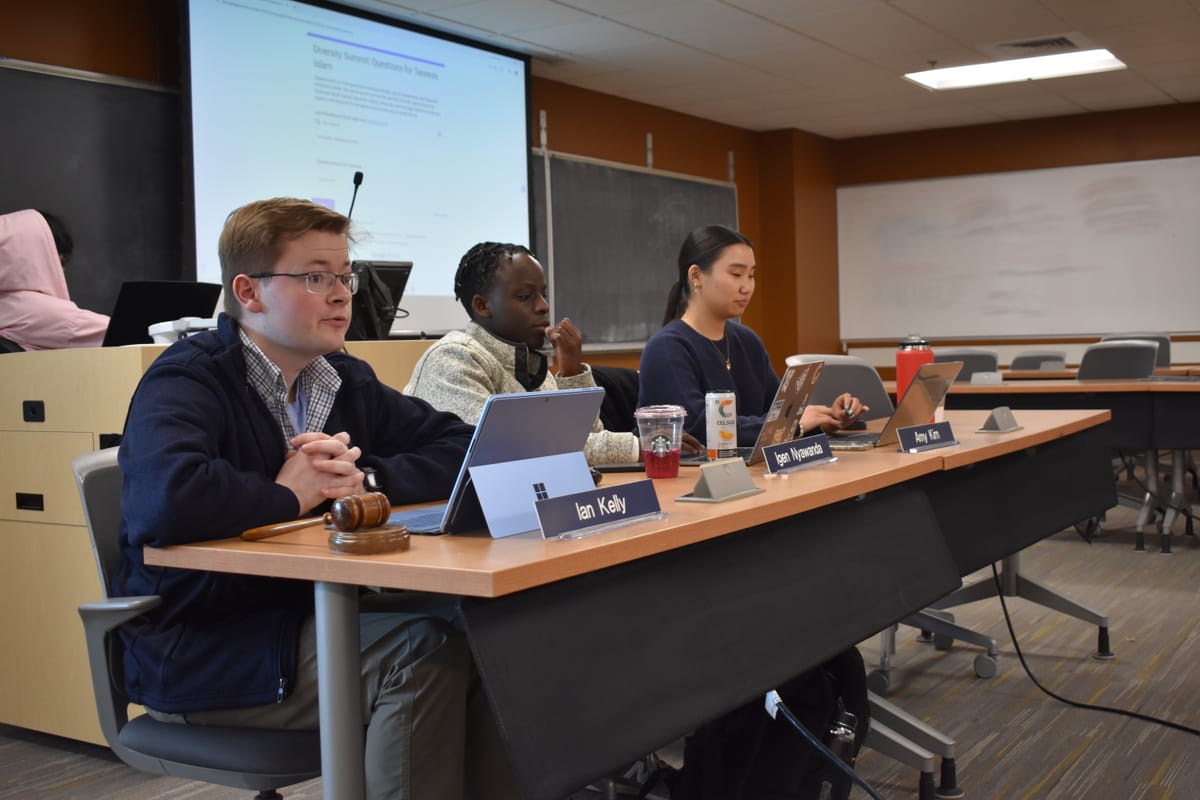
The Augustana Student Association (ASA) passed an amendment on March 18 to overhaul its Registered Student Organization (RSO) funding model.
The amendment consolidates the three main funding pools — Leadership Development Funds (LDF), Community Development Funds (CDF) and Mini-Grants — into one larger pool, the Registered Student Organization Request Fund (RSOR). The measure passed 16–6–0, clearing the required two-thirds threshold by a two-vote margin.
The consolidation trims the RSO funding bylaws from more than 12 pages to 8.5. fourth-year treasurer Ian Kelly, the primary architect of the amendment, hopes this simplified model will make the funding process more accessible for students unfamiliar with ASA.
However, critics like first-year senator Ayden Calvert argue that the simplification removes essential “guardrails” that separated the funds for specific use and expressed concern that the changes passed after only a few minutes of floor debate.
Kelly emphasized that the consolidation does not change what clubs can receive funding for, only how they ask for it. Rather than applying to specific funds for specific purposes, all requests will now be drawn from the single RSOR pool.
“If you wanted an LDF, LDFs are still here. CDFs are still here. Mini-Grants are still here,” Kelly said. “You just don’t have to worry about that part anymore. If you operate a club and you want money, odds are, most of the time it’s covered.”
The dissenting minority believes that consolidating these pools removes the Senate’s ability to effectively balance spending on different types of campus opportunities. While Calvert commended the effort to streamline the funding system, he believes separate funds was necessary.
Without those boundaries, Calvert worried a future Senate facing a high volume of requests won’t know how to distribute the money evenly, especially given the high turnover rate in student government.
“We are relying upon the assumption that institutional knowledge will stay in the Senate, and that’s just not true,” Calvert said.
The amendment also creates new boundaries on how RSOs can spend ASA funds.
Under the previous model, clubs had to apply to separate pools designated specifically for leadership travel, campus events or equipment. By tapping into CDF, LDF and Mini-Grant requests simultaneously, a club could reach a maximum of $9,000. However, Kelly noted this ceiling was essentially theoretical, as no club ever came close to reaching it. The new RSOR caps a single organization’s funding at $6,000 per year.
Within that annual maximum, the amendment also established caps on individual funding requests, with single requests limited to $2,500 and off-campus travel allocations capped at $400 per person.
Further restrictions tighten retroactive funding requests. Previously, organizations could request up to $1,500 in reimbursements for past events at any Senate meeting. Now, retroactive funding requests are only available at the first meeting of each semester, and the maximum reimbursement has been set at $1,000.
The way organizations request funds from ASA has also changed, requiring a more specific cost breakdown from club leaders up front.
Third-year senator Abigail Smith, who formatted and presented the amendment, worked with Kelly to include a new clause requiring RSOs to provide an itemized budget complete with website links or official quotes for every requested item.
Smith noted that senators already ask about price points within funding requests at almost every meeting.
“This is information you’re going to have to detail anyway, so why not just get it done ahead of time?” Smith said. “Save the Senate some time asking about these requests. I don’t think that will be a barrier for students either.”
Kelly supported the addition, noting that upfront verification will fundamentally change the nature of debates regarding funding requests. According to Kelly, previous debates have devolved into senators scrutinizing price estimates by searching for cheaper alternatives during the meeting.
“Basically the discussion isn’t ‘are these costs legitimate,’ it is, ‘is this a good use of our money,’ which is a better discussion for us to have anyway,” Kelly said.
The final version of the amendment was the result of a months-long process. Kelly drafted the initial proposal over the summer before presenting it to the Governing Documents Committee at the start of J-term, where Smith worked to format the 24-page amendment.
When the amendment reached the Senate floor, though, Calvert criticized how quickly the amendment was passed, saying that open-floor discussion only lasted a few minutes.
“How much time we’re willing to devote towards changing the funding process and what that signals to students, I think, will be the most lasting thing,” Calvert said. “And our lack of attention to this matter was really alarming.”
While Smith felt the amendment was thoroughly vetted in committee, she said that a longer floor debate could have helped clarify the opposition’s concerns.
“I didn’t think there would be that many senators voting against it,” Smith said. “Maybe I do wish we had more discussion because I wonder why people voted that way.”
The new rules and RSOR process was introduced to club presidents and treasurers during the mandatory spring training session on March 25 ahead of full implementation for the 2026–27 academic year.