Movie Review: "Wuthering Heights" embraces the dark, destructive side of love
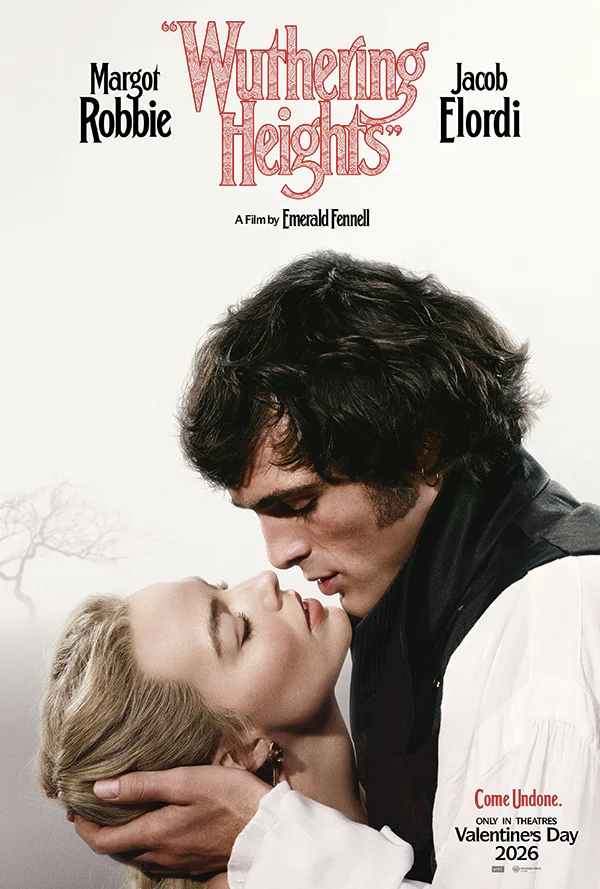
More than a century after Emily Brontë wrote “Wuthering Heights,” the 2026 film directed by Emerald Fennell proves Catherine (Margot Robbie) and Heathcliff’s (Jacob Elordi) story is more emotionally powerful than ever.
What stood out to me the most about the film was how it did not try to make their relationship comforting or romantic. Rather than presenting love as something gentle, it leaned into the darker and more painful sides of love, which made Catherine and Heathcliff’s story more raw and realistic.
Instead of focusing primarily on the original novel’s themes of class divisions, racial tension and gender roles, Fennell's interpretation highlights the challenges of love in the late 1800s and sets a mood of bleakness and isolation.
I appreciated how the setting helped to reflect the emotions between Catherine and Heathcliff. Fennell created a moody landscape with dark skies and desolate hills that conveyed emotional distance between the couple, as well as the loneliness they experienced.
The theme of isolation becomes essential in order to understand both Catherine and Heathcliff. Their relationship is intense but far from traditional. Instead of focusing on warmth, their connection is tainted by tension, pride and stubbornness.
Heathcliff is a complicated character, driven by pain and a yearning to be chosen. I acknowledged how his childhood trauma of abuse drove him to become destructive and dangerous at times due to his fear of abandonment and fear over losing Catherine. What stands out the most to me is how Fennell did not soften Heathcliff’s darkness. Instead, she used it to confront the ugliness of his grief and reveal his passion for Catherine.
Meanwhile, Catherine struggles between her love for Heathcliff and the pressure to provide a better life for her and her family. Watching the film, I felt like their love was never meant to be calm. Instead, it is often silent or distant as both fight their own stubbornness. In doing so, they express more than words ever could. Their relationship is damaging — shaped by rejection, social pressures and insecurity.
I valued Margot Robbie’s portrayal of Catherine because she captured both her charm and pain. Her performance allowed the audience to see the vulnerable side of Catherine and how her desire for social status conflicted with her own heart. She was not someone I saw as cruel or selfish, but as a young girl who was pressured to find a better life at the cost of her own happiness.
Watching Jacob Elordi’s performance of Heathcliff, I was enamored by his broodish and rageful portrayal. I could feel Healthcliff’s jealousy and anger through the screen. Elordi showed us how Heathcliff was shaped by rejection and humiliation, giving the character a quiet but dangerous presence. I respected how he communicated the nuance of his character through silence because it revealed the years of Heathcliff’s unresolved pain.
Together, Robbie and Elordi create a complex dynamic that shows the destructive nature of Catherine and Heathcliff’s relationship. Their chemistry was romantic but haunting. Both characters were trying to hold power over each other, resulting in passion, isolation and darkness.
On top of this, I liked how Fennell did not explain or justify their actions, allowing the audience to form their own thoughts on the relationship. I also found it interesting how storms reflected the destruction of their situation, while dark colors showed the emotional weight of the relationship between the two.
What makes this version of Brontë’s story unforgettable is its refusal to accept comfort. Unlike traditional romantic films, “Wuthering Heights” does not push the idea that love fixes everything. Instead, it shows how passion and intimacy can shape people in ways that are both painful and meaningful.
I found this portrayal very powerful because it explored the troubling side of being with someone. There’s anger, pride and hurt that exists in the depths of two people’s affection for each other.
Overall, the 2026 film adaptation of “Wuthering Heights” is a powerful and dark exploration of love. Its moody setting and raw portrayal of Catherine and Heathcliff’s relationship challenges the audience to reflect deeply on the emotional truths of love. For me, the film’s desire to show their relationship as messy, painful and damning is what made it so memorable.