Why subsistence fishing still matters
Having grown up in the Hudson River Valley of New York, I hit the fishing lottery. There are vast, clean freshwater reservoirs that filter water for New York city residents, as well as lakes, ponds and streams — many holding some type of large, beautiful trout.
April 1 was more than April Fool’s Day for me as a kid. It was the annual trout stocking day for many of the local streams — a day when I’d skip school to go fishing with my father. We fished these streams with spin rods and used live worms or shiny lures, a silver Phoebe spoon being one of my all-time favorites.
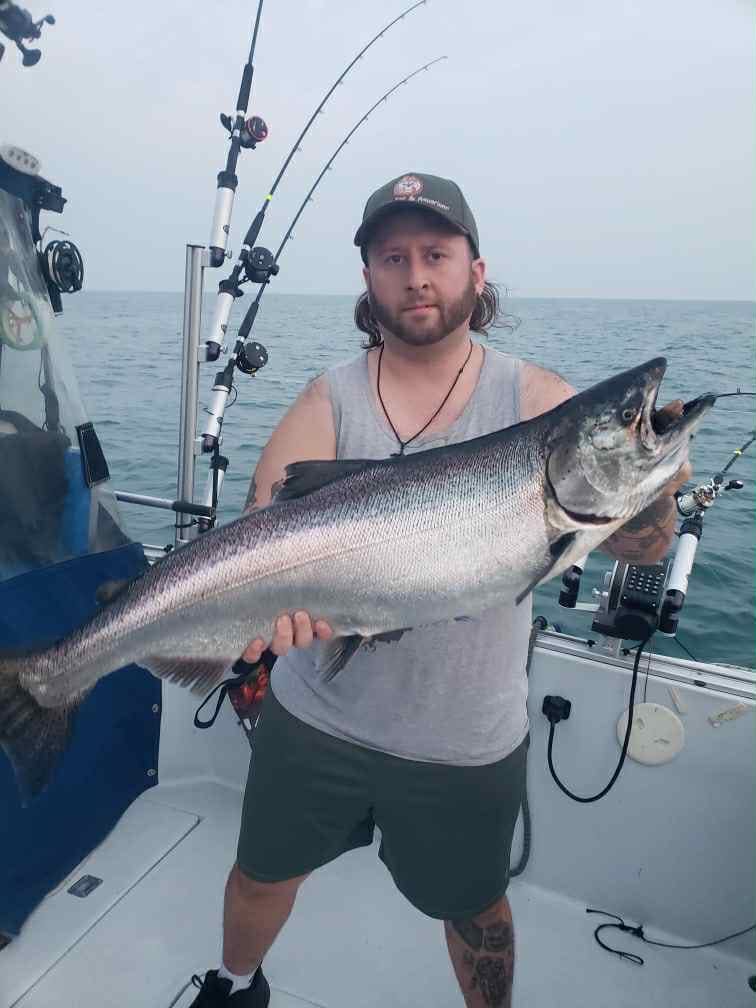
Oftentimes, my father and I would harvest the trout that we caught. We would eat it, give it away or trade the meat to someone for something else in return. A couple of times, I traded a surplus of trout that I caught for Chinese food from a local restaurant.
This is called subsistence fishing: a traditional form of fishing that provides food and sustains livelihoods, with catches often used for meals, shared within a community, or stored for later use.
The sad irony is that every fish experiences some sort of pain when a hook is set and they are fought by anglers. When trout are caught and harvested, they’re typically put out of their misery as humanely and quickly as possible. Sure, humane killing may sound like an oxymoron to many people, but the eloquent idea of “catch and release” seems a bit contradictory when put into the perspective that the fish is released exhausted and injured.
In fly fishing, most anglers catch and release. I began fly fishing in 2023. To me, fishing with a spin-rod in a stream is not that different from fly fishing. You typically let whatever lure you cast out drift downstream with the current and wait for a hit. For someone like me who has been fishing since the age of three, it’s not rocket science — even though that’s what many modern fishing “influencers” make it out to be online.
An eye-opening book that elaborates on the history and dichotomies between the technical kinds of fishing, as well as subsistence being conservation, is “An Entirely Synthetic Fish” by Anders Halversen. Every fisherman needs to read this.
I appreciate subsistence fishing and believe it is conservation because it’s for personal use as opposed to large, commercial profit. It also helps aquatic life by ensuring that no certain fish species dominates the ecosystem.
Regardless of the differences between types of fishing and how fishermen themselves have drastically changed over time, all types of fishing and people should be respected so long as they are ethical and do not break conservation laws.