Studio 47 moves toward immersive VR space
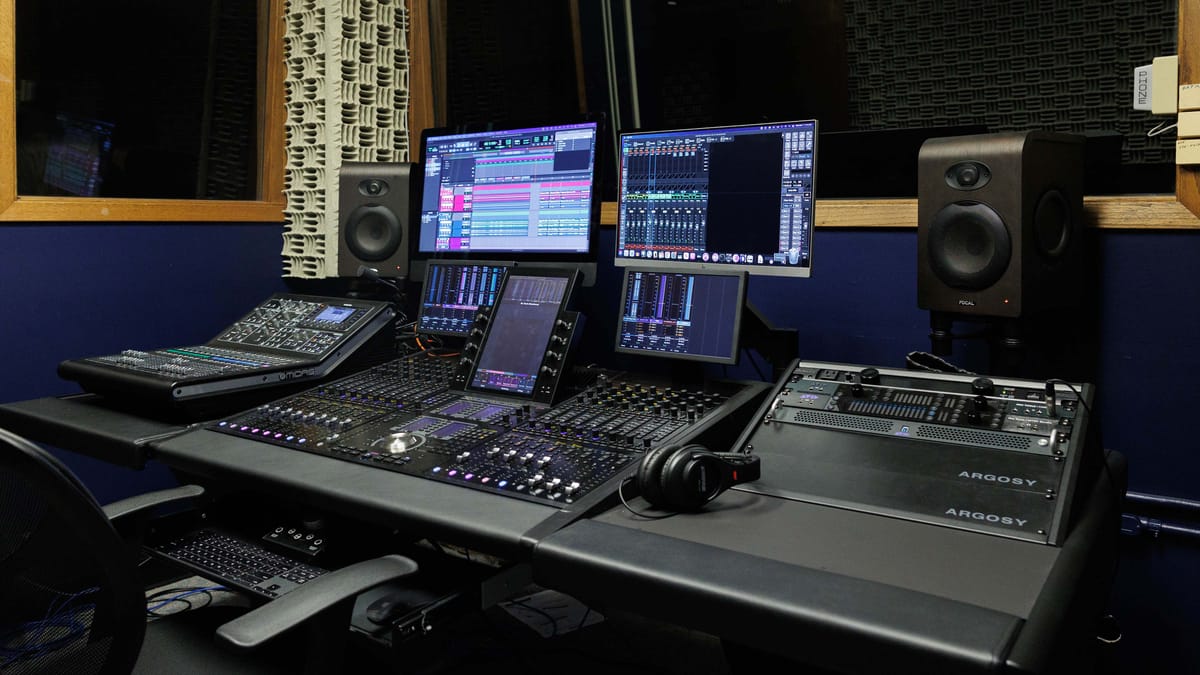
The Augustana School of Music is exploring ways to turn Studio 47 into an immersive virtual reality space after receiving a $250,000 pledge in 2023 that upgraded the studio’s sound and speaker system.
Located in the basement of Fryxell Humanities Center, Studio 47 was created in 2013 and serves as the School of Music's professional recording studio. After receiving the pledge from Board of Trustees member Maria Bell, the School of Music installed a 7.1.4 Dolby Atmos speaker system, which was recently upgraded to a 9.1.6 system.
Since then, the School of Music has shifted its efforts toward potentially integrating virtual reality (VR) and augmented reality (AR) into the classroom, thanks to 30 recently purchased MetaQuest 3S headsets.
According to Media Librarian Craig Johnson, the headsets — along with traveling cases and charging carts — are housed in the library with limited use for engineering students and whoever else may be interested. To check one out, students can go to the front desk on the library’s main floor, where they will need to sign up for a training session and sign a waiver.
Peter Folliard, dean of the School of Music, kickstarted the VR effort, developing a pilot program with Johnson for engineering students to use.
Since then, Folliard has begun to imagine what VR might look like in the Studio 47 space. Though the funding was initially intended only to implement the Dolby Atmos system, Folliard said that Bell has since allowed for a redirection of remaining funds towards VR and AR.
“What’s awesome about Bell is that she sees how fast things evolve,” Folliard said. “She has a company called Digital Twin Imaging that leverages virtual technology beyond sound — they call it 4D technology. We likely will be redirecting some of our funding to create an immersive lab space.”
Unlike traditional schooling, Folliard said VR allows for a unique classroom experience that can cut down on equipment costs and enable students to explore a wide range of experiences they normally wouldn’t have access to, including DJing and operating expensive audio equipment.
“You don’t need to buy everybody a tactile DJing kit,” he said. “You can grab knobs and sliders, you get haptic feedback, and you can mess around with music in a virtual space. It’s a great opportunity for experimentation.”
Johnson echoed this sentiment, highlighting the potential for academic use of VR even beyond the realm of music.
“VR and AR are being used in fantastic ways in academia,” he said. “I could see them being used to practice giving public speeches, clinical nursing simulations, investigate the human body in biology labs, and simulate the operation of complex machinery for engineering students.”
Despite these new possibilities, Folliard noted that Studio 47 currently faces several challenges that cause sound-bleed, including a hollow ceiling, thin walls and a concrete base that is not separated from the rest of the rooms surrounding the studio.
To combat these difficulties, Frank Cook, professor of media production and entrepreneurship studies, says that further upgrades are soon to come.
“We plan to give the studio a facelift in the coming months, providing better lighting, more comfortable conditions and better sound isolation,” Cook said. “Down the road, we hope to move the studio into a larger space that would facilitate more immersive and interactive experiences, combining spatial audio with AR and VR exploration.”
Until these changes come to fruition, Augustana community members will continue to utilize Studio 47 for a variety of purposes. Cook says that media production and entrepreneurship students are currently writing and mixing music in Dolby Atmos.
“By the end of the semester, they will have completed pieces showcasing their composition, recording, producing, and immersive mixing skills,” Cook said.