BSU welcomes Senate candidate for conversation on race, policy and campus life

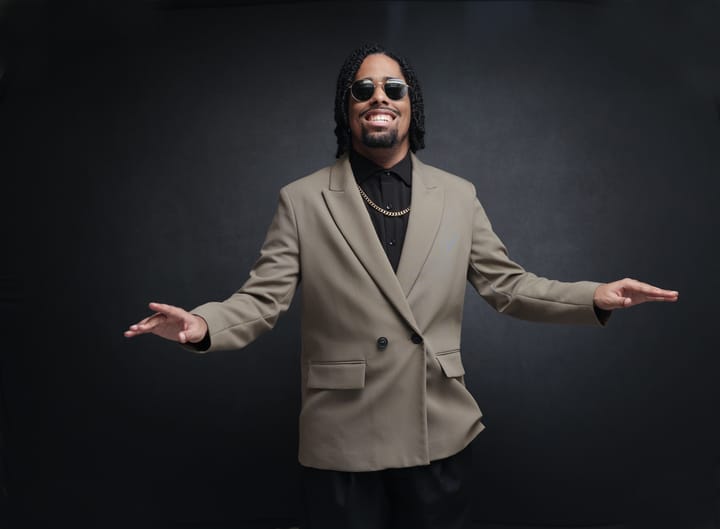
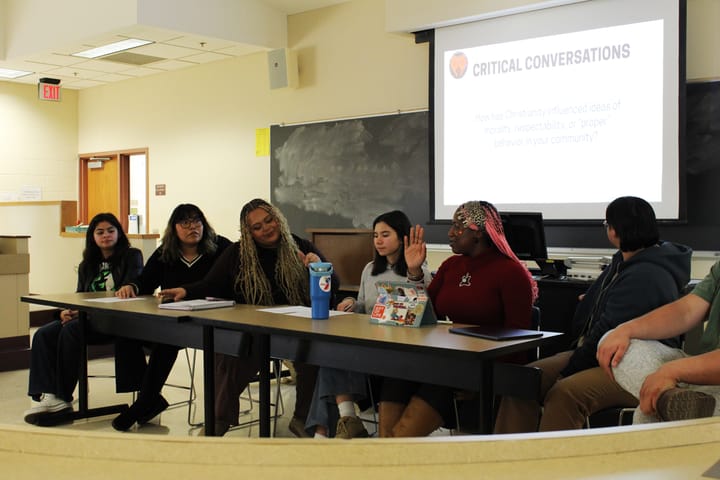
On Monday, Nov. 17, Augustana’s Black Student Union (BSU) hosted a meet-and-greet event with United States Senate candidate Julian Beaudion, during which he shared his platform and responded to student concerns.
“If you talk to political operatives across the state they’ll tell you ‘Hit the I-29 corridor, that’s where the people are,’” he said. “That tells me the rest of the state has been forgotten, so I plan to hit all 66 counties to talk to everyone.”
During the event, Beaudion spoke on a number of issues, including the economy, education and the challenges people of color face in South Dakota. He put emphasis on being the first Black person to run for a federal office in the state of South Dakota, noting that his being Black is not a topic he shies away from during his campaign but rather leans into.
“He was very transparent about how he’d be the first Black person in the state to hold this position,” Jenna Hageman, senior and BSU president, said. “I’m glad that he’s being vocal about how important his candidacy is.”
Relatedly, Beaudion touched on Augustana’s recent dissolution of its Office of Diversity, Equity and Inclusion. While discussing diversity, he stated that he believes the university continues to offer the same programs — simply under different names.
Hageman acknowledged Beaudion’s stance, believing that his heart is in the right place but that he ultimately doesn’t have an Augustana student’s perspective.
“I did not agree with his take on the lack of our DEI office. His whole argument was that DEI is in every aspect of the school, which is good, and it should be,” Hageman said. “But I think a missing component is that students of color don’t have a place to go. There is a high level of bureaucracy, and now you have to go through a high level of people to get to the one thing you want.”
In addition to diversity concerns on campus, Beaudion also discussed economic matters that are affecting students while they are at school and their decisions after graduation.
He noted that South Dakota’s Board of Regents offers reduced tuition to people in certain careers — such as state government and teaching — that stay and work in the state upon graduation from state schools.
“That wouldn’t apply to folks here at Augustana University, however,” Beaudion said. “My goal would be to actually get federal college tuition reimbursement on the records for South Dakota so that it would impact every college or university, not just the state-funded ones.”
He also talked about the recent rise in construction of data centers for artificial intelligence, discussing the balance between job creation and environmental impact.
“Whatever you feel about data centers, that's still important for the production of technology we have growing in our state,” Beaudion said. “That’s a whole different conversation when you talk about the clean energy and impact on farmers, but South Dakota has the fastest growing technology industry out of all the states.”
Some students agreed with the idea that these data centers are important for job creation but don’t want to brush off the environmental concerns that come with them.
“I disagreed with him a little bit on the databases aspect,” Angelina Sandoval, freshman Spanish and government and international affairs double major, said. “I can respect the fact that he acknowledged it’s not good for the environment, but it’s still something we sadly have to live with as technology progresses.”
This event also served as a way to get students involved in politics outside of the national scale, when political campaigns tend to be most visible.
“It’s really cool to see a candidate interacting with the people they represent,” Sandoval said. “What strays a lot of people from voting is that they don’t feel a connection to each candidate.”
Some students attending this event also believed that this is a first step toward political discourse during a time in which it can be daunting to share one’s beliefs with others.
“We need to be having more dialogue. And in that dialogue we can have greater critical thinking,” freshman government and international affairs major Ayden Calvert said. “We can have greater discussions about solutions moving forward and how to come together to heal our democracy.”
Members of the BSU hoped that this event would serve as a launching point for more discussion on campus.
“Have these conversations, especially when you’re given a space to participate,” Hageman said. “Entrench yourself in a community, and have these hard conversations where we are open to dialogue.”